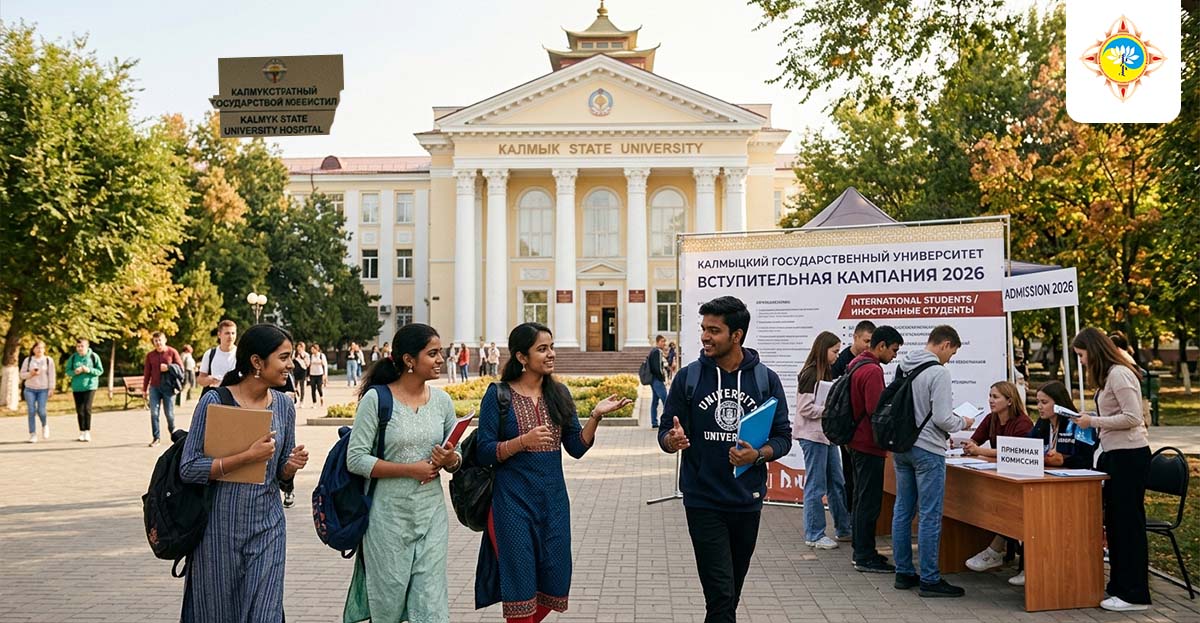
- October 21, 2026
- Kalmsu Team

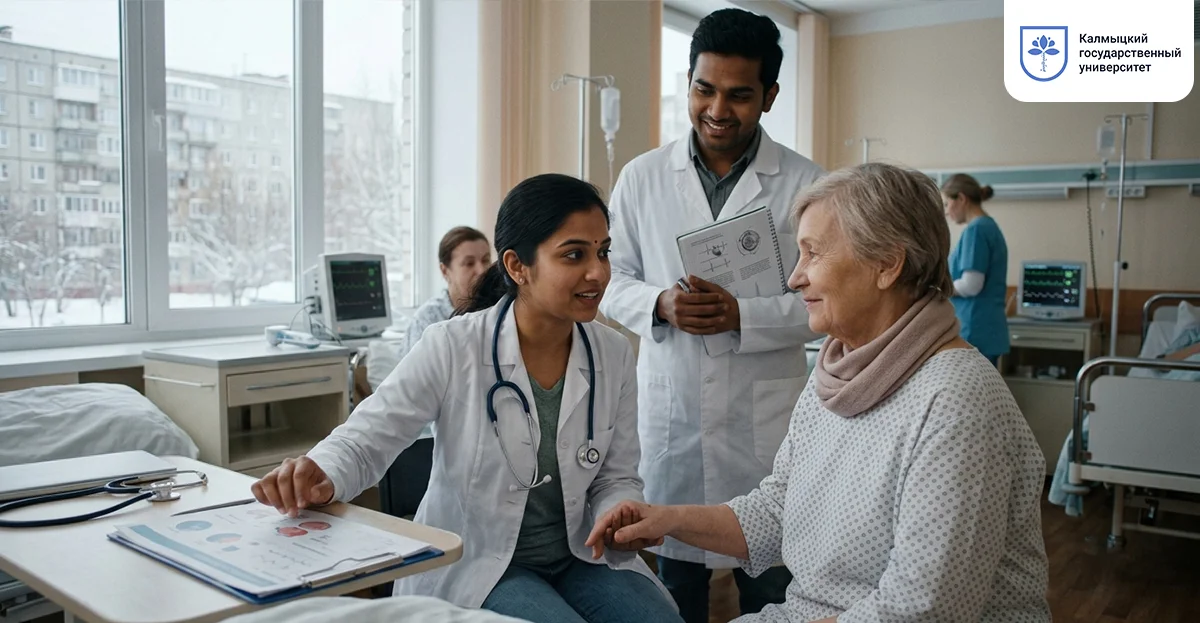
Studying MBBS in Russia offers Indian students the opportunity to learn medicine in an international academic environment. However, medical education involves more than understanding lectures, textbooks, and medical terminology. During clinical training, students also need to understand patients, communicate with healthcare professionals, and become familiar with the local hospital environment.
For Indian students pursuing MBBS at Kalmyk State University, learning Russian can be an important part of preparing for these experiences. Although the programme is taught in English, basic Russian language skills can help students communicate with local patients and adapt to clinical settings. The university's published information also highlights the role of Russian language learning in hospital communication.
So, why is learning Russian important during MBBS in Russia, and how can it support Indian students during clinical training? Let's understand the key benefits.
Russian language learning helps international medical students prepare for everyday communication and patient interactions in a Russian-speaking environment.
While English helps students understand their academic curriculum, Russian can become particularly useful when they begin interacting with patients and hospital staff. Understanding commonly used words and phrases can help students follow conversations, ask basic questions, and become more comfortable in clinical settings.
For Indian students at Kalmyk State University, learning Russian is therefore not just about adapting to life in Russia. It is also a practical step towards making the most of their medical education.
Communication is an important part of medical education because understanding a patient's concerns is essential to learning how clinical assessments work.
During supervised clinical learning in Russia, students may observe consultations, participate in discussions, or practise basic communication skills as permitted by their training. When patients speak Russian, even a basic understanding of the language can help students recognise common expressions and follow simple conversations.
Learning Russian can help students practise:
These skills can support communication, although students should never rely on limited language knowledge when interpreting important clinical information. Patient care must remain under appropriate professional supervision.
Taking a patient's history is an important part of clinical education. Students learn how to ask about symptoms, understand their duration, and gather relevant information about a patient's health.
However, these conversations can become challenging when students are unfamiliar with the language being spoken.
Learning Russian medical vocabulary can help students become familiar with common terms related to symptoms, body parts, illnesses, and treatment. For example, recognising frequently used words for headache, fever, pain, or coughing can make it easier to follow basic patient conversations during supervised clinical activities.
Language learning does not replace medical knowledge or formal clinical training. Instead, it supports students as they learn to connect theoretical concepts with real-world patient interactions.
Hospitals involve communication between patients, doctors, nurses, and other healthcare professionals. Students may also encounter Russian-language signs, instructions, and commonly used medical expressions.
Learning Russian can help Indian medical students become more familiar with this environment. It may make everyday interactions easier and help them follow routine communication more confidently.
For students pursuing MBBS in Russia, developing these skills gradually can reduce some of the uncertainty associated with entering an unfamiliar clinical setting.
Communicating in another language can feel difficult at first, particularly when students are already learning complex medical subjects.
Regular Russian language for MBBS practice can help students become more comfortable with basic conversations. As their vocabulary improves, they may find it easier to introduce themselves, ask simple questions, and participate in appropriate supervised learning activities.
Confidence should develop alongside accuracy. Students must recognise when they do not understand a patient or instruction and seek clarification from their clinical supervisor rather than guessing.
Medical textbooks introduce students to diseases, symptoms, diagnosis, and treatment. Clinical education helps them understand how these concepts are applied in healthcare settings.
Russian language skills can support this transition by helping students recognise familiar medical terms during patient interactions and clinical discussions.
For example, a student who has studied the symptoms of a respiratory condition may benefit from recognising related words during a supervised patient interaction. This can help connect classroom learning with the clinical context.
The combination of medical knowledge, language practice, and supervised clinical experience can contribute to a more well-rounded medical education.
Learning Russian language for MBBS does not have to happen all at once. Students can develop their language skills gradually through regular practice and by applying what they learn in everyday situations.
Begin with common greetings, questions, numbers, directions, and phrases used in daily conversations. These basics can help students become more comfortable communicating with local people.
As students progress, they can build their vocabulary around body parts, symptoms, common illnesses, and patient history questions. Learning words in relevant contexts can make them easier to remember and use appropriately.
Listening to Russian conversations, repeating phrases aloud, and practising simple dialogues can help students improve their pronunciation and comprehension. Consistency is more useful than trying to memorise large amounts of vocabulary at once.
Classroom exercises, role-play, and teacher-guided practice can help students prepare for clinical communication. Students should use Russian in patient-facing activities only within the scope of their training and with appropriate supervision.
At Kalmyk State University, Indian students can pursue medical education through an English-medium programme while learning basic Russian for communication in the local environment.
This combination is important because understanding medical subjects in English and communicating with Russian-speaking patients are two different skills. Developing both can help students prepare for the academic and practical aspects of medical education.
Students should follow the university's current curriculum and language-learning guidance to understand how Russian instruction supports their programme and clinical preparation.
Learning Russian is a valuable part of preparing for MBBS in Russia. For Indian students, it can support communication with local patients, help them understand common medical expressions, and make it easier to adapt to the hospital environment during supervised clinical training.
At Kalmyk State University, learning medicine in English while developing basic Russian language skills can help students prepare for the different demands of medical education. The key is to practise consistently, build medical vocabulary gradually, and recognise the importance of accurate communication and clinical supervision.
If you are planning to pursue MBBS at Kalmyk State University, understanding the role of Russian language learning can help you prepare for your academic journey and life in Russia.
October 21, 2026

© Copyright Kalmyk State University 2026. All Right Reserved. Designed and Developed by Kalmyk State University
.webp)